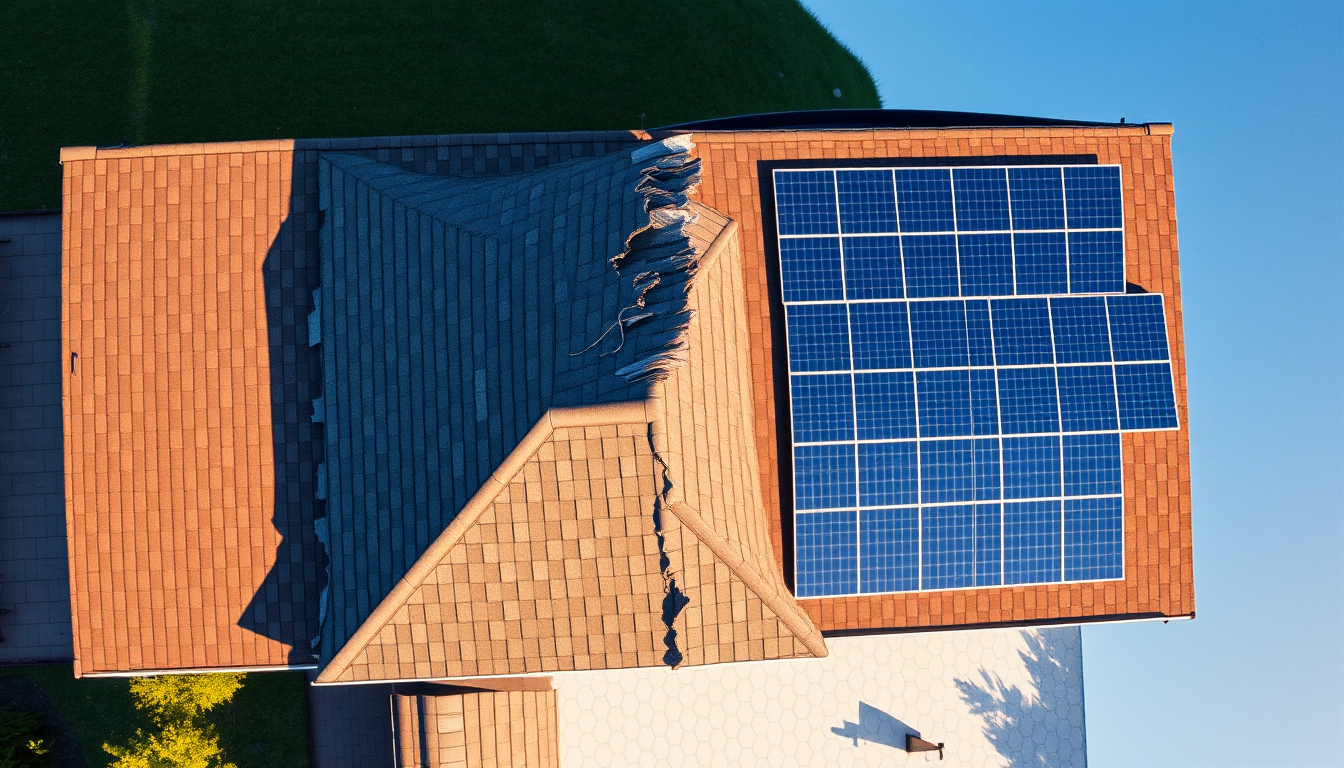
Do I Need a New Roof Before Going Solar? The Cost Math That Changes Everything
Solar panels last 25 to 30 years; a typical asphalt roof only about 20. If your roof is near the end of its life, installing solar now means paying $2,000 to $10,000 later to remove and reinstall the whole array. Here is the age rule by roof type, the inspection checklist, and when bundling a reroof with solar saves about $4,000.
You can spend months comparing panel brands, battery options, and financing. And the one question that quietly kills more solar projects than any of that is: what about my roof?
Solar panels are built to sit on your roof for 25 to 30 years. A typical asphalt shingle roof is engineered for roughly 20. That gap is the whole story. If the roof underneath your future panels is close to the end of its life, you are almost guaranteed to pay to take the panels off and put them back on when the roof finally fails. That cost is real, it is large, and it is entirely avoidable if you make the roof decision before you sign a solar contract.
Here is the framework, with the actual numbers.
Why the roof decision comes first
A residential solar array is not an antenna you pop on and off in an afternoon. The mounting hardware (racking) is bolted straight through the roofing material into the deck or rafters below. Every attachment point is flashed and sealed to keep water out. A standard system can mean 30 to 60 individual roof penetrations.
When you need a roof replacement after solar is already installed, a crew has to: disconnect the electrical system, unbolt every panel and every piece of racking, store the equipment on site, do the full roof replacement, reinstall all the racking and panels in their original configuration, and reconnect and re-inspect the electrical system. The industry calls this a remove-and-reinstall, or R&R.
That R&R typically runs $2,000 to $5,000 for a standard job. A commonly cited figure is about $250 to $350 per panel, which works out to roughly $4,000 to $10,000 for a 15 to 30 panel system. Complex jobs (steep or tile roofs, microinverters, new racking and wiring) can push that to $400 to $800 or more per panel. Larger systems or hard-to-access multi-story homes can exceed $7,000.
Here is the part that makes it sting: that money produces zero extra energy and zero extra savings. It is pure friction. And a home solar system that saves you, say, $1,200 to $1,800 a year just gave back 3 to 4 years of that savings to a single avoidable R&R bill.
The age rule, by roof type
The single most important input is how much useful life your roof has left, compared to the 25 to 30 year life of the array. Age alone is not the answer. Condition is. But here is where to start.
Asphalt shingle (about 75 to 80% of U.S. homes, and the type most likely to create this timing conflict):
- Under 5 years old: install solar. Your roof has 20+ years left.
- 5 to 15 years old: get a professional inspection. A well-ventilated roof in a mild climate can easily outperform its rated life. A poorly ventilated roof in the Sun Belt can fail well before it.
- Over 15 years old: replace first. The R&R cost will almost always exceed the savings of going solar now.
A simple rule of thumb from EnergySage: replace an asphalt roof before solar if it is more than about 10 years old, or within roughly 5 to 10 years of needing replacement.
Tile (clay and concrete): rarely a concern. Clay tiles routinely last 50 to 100 years and concrete 40 to 75, so the roof will outlast multiple generations of panels. The issue with tile is not timing, it is installation method. Mounting on tile needs specialized tile hooks or replacement mounts, and not every installer is experienced with them. Improper work cracks tiles and creates leak paths. Confirm your installer has documented experience with your specific tile.
Metal: often the best roof for solar. Standing-seam metal lasts 40 to 70 years and mounts with clamp-on systems that require zero roof penetrations. No holes, no added leak risk. If you have a standing-seam roof under 20 years old, solar is a straightforward call.
Flat or low-slope (BUR, modified bitumen, TPO, EPDM): membranes have shorter lives than pitched materials, roughly 15 to 25 years for BUR and modified bitumen and 20 to 30 for TPO and EPDM. The offset is that flat-roof solar usually uses ballasted (weighted) mounts that do not penetrate the membrane, which makes R&R cheaper and simpler. Rule of thumb: under 10 years, install; 10 to 18, inspect for wear around penetrations and ponding; older than 18 to 20, replace the membrane first.
The inspection checklist
Whether you hire a pro or do an initial check yourself, this is what separates a "fine" roof from a "replace it first" roof:
- Missing, cracked, curling, or buckling shingles (High)
- Granule loss, visible as grit in your gutters and at downspouts (Medium-High)
- A sagging roof deck or ridge line (Critical)
- Active leaks, or water stains on ceilings and damp attic decking (Critical)
- Damaged or lifting flashing around chimneys, vents, and valleys (High)
- Moss or algae growth trapping moisture (Medium)
- Blocked soffit vents or a missing ridge vent (Medium)
Any item marked Critical is a non-negotiable. Do not install solar until the underlying issue is fixed, whether that is a targeted repair or a full replacement. Several High items on one roof generally means it is approaching end of life, and replacing it before solar is the right call.
A licensed roofer, not a solar salesperson, should inspect and estimate the roof's remaining life before you sign anything. A short inspection now is the cheapest insurance you will buy on this project.
Bundling is often the smart move
If you are going to replace the roof anyway, the Department of Energy points out that a roof replacement is a great time to add solar, because you plan the two projects together instead of tearing a fresh array off a roof a few years later. DOE estimates that bundling the two saves an average of about $4,000 versus doing them separately, largely from shared labor, scaffolding, and mobilization.
One important correction: the 30% federal solar tax credit (Section 25D) ended December 31, 2025, and it never paid for a roof replacement anyway. So do not let the expired credit distort this decision. The math is simply: panels last longer than the roof, the roof is the shorter-lived layer, and the roof should be sound (or new) before the array goes on.
What to actually do
- Find out how much sun your specific roof actually gets and what size system it can hold. That is the part that is unique to your address and not to your neighbor's.
- Get an independent roof inspection on the same sun-facing plane the array will sit on.
- Compare the two numbers. If the roof has 20+ years of life left, go solar now. If it is near the end, replace the roof and bundle the solar install.
The cleanest first step is the one most people skip: getting the address-specific solar numbers before you commit to anything, so you know the system size and the annual savings you are planning a roof around in the first place. Scan your home at https://solrscan.com to get the sunshine hours, panel fit, system size, and projected savings for your exact address. Then take those numbers to a roofer, and make the roof decision with both pieces of the puzzle in hand.
Sources
- OhmSnap, "Should You Replace Your Roof Before Going Solar? The Decision Guide" (2026)
- SolarFY, "Solar Before Roof Replacement: Should You Wait? (2026)"
- U.S. Department of Energy, homeowner solar guidance on roof replacement timing
- EnergySage, asphalt-roof age rule of thumb (2026)
- NRCA, asphalt roof service life (2026)
SolrScan estimates are based on satellite imagery and public data. Consult a licensed installer for a site-specific assessment.