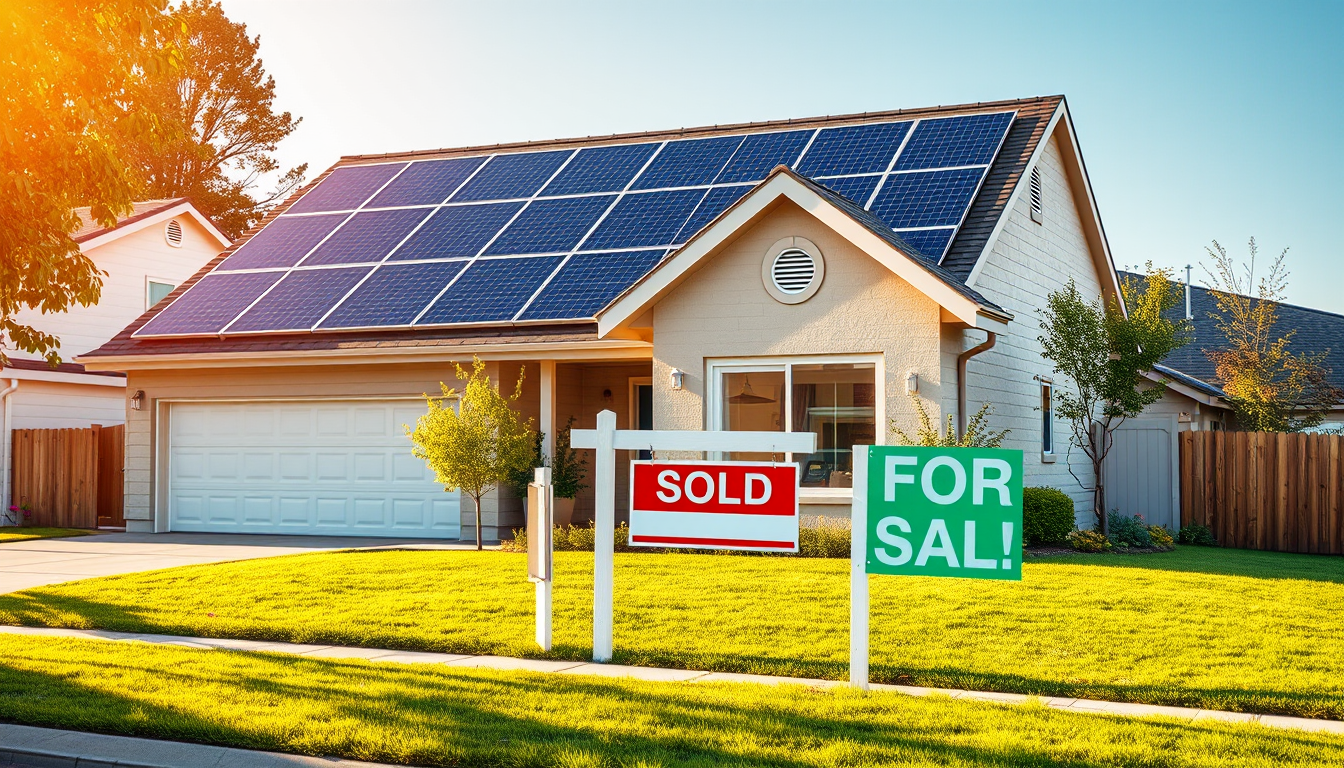
Do Solar Panels Actually Add Value to Your Home? (The Real Numbers, State by State)
Owned solar adds a real, measurable premium to home value. Here is what Zillow, SolarReviews, and Lawrence Berkeley National Lab actually found, the per-kilowatt number that helps you estimate your own, and why the leased-vs-owned split is the difference that matters most.
"Will this actually make my house more valuable, or am I just paying for a gadget on my roof?"
It is one of the most common questions homeowners ask before going solar, and it makes total sense. You are not just buying energy. You are putting a permanent, physical system on the most visible part of your home. If you are thinking about selling someday, that decision should count.
Here is the honest answer: yes, owned solar adds real, measurable value to a home. But the number varies a lot by where you live, how big the system is, and whether you own the panels outright or lease them. Let me walk you through what the research actually says, so you can do the math for your own roof.
What the big studies found
The most-cited data on solar and home value comes from a few independent sources, and they broadly agree:
- Zillow (2024): Homes with solar sold for about 4.1% more than comparable non-solar homes. On a $400,000 home, that is roughly $16,400.
- SolarReviews (2025): A follow-up study of 400+ recently sold homes found a higher premium of 6.9%, or about $29,000 on a median-valued home.
- Lawrence Berkeley National Lab: A large multi-institutional study of 22,000+ home sales across eight states found buyers paid an average of about $4 per watt of installed solar, roughly $15,000 on a typical system.
The exact percentage varies by time period, region, and home price point, but every major study lands on the same conclusion: the premium is real, measurable, and consistent nationally for systems you own.
The per-kilowatt number that actually helps you
Percentages are hard to picture. A more useful way to think about it is per kilowatt of capacity. Zillow research values each kilowatt of solar capacity at roughly $5,911 in added home value. That gives you a clean way to estimate your own:
- A 5 kW system adds about $29,500.
- A 7 kW system adds about $41,400.
- A 10 kW system adds about $59,100.
This per-kW approach is especially useful in neighborhoods where there are very few comparable homes with solar. You do not need to find a recently sold solar-equipped house nearby to get a defensible number. You just need to know how much capacity fits on your roof, which is exactly what a satellite scan can tell you.
Owned vs. leased: the difference that matters most
This is the single most important variable, and it is why the answer to "do solar panels add value?" is "it depends."
Owned solar adds value. An owned system transfers to the buyer automatically at closing. There is no third party, no monthly payment to assume, no credit check. The buyer simply inherits the equipment and the lower electric bill. That clean handoff is what drives the premium.
Leased panels and power purchase agreements (PPAs) add roughly $0. Instead of a value boost, a lease introduces friction. The buyer must apply with the leasing company, pass a credit check, and agree to take over the remaining contract with its monthly payment and annual escalator clause. A typical lease runs 20 to 25 years, so a system installed ten years ago leaves the buyer with a 10 to 15 year remaining obligation. In markets where buyers are unfamiliar with lease assumptions, this narrows your pool of buyers. If you are leasing and thinking about selling, the cleanest exit is usually to buy out the lease (often $5,000 to $15,000) before you list.
The rule of thumb: if you want the value add, buy the system. If you lease it, plan on the value staying flat.
Why the premium is higher in some states
The national average hides a lot of local variation. A few things push the premium up or down:
- Higher electricity rates mean bigger savings, and bigger savings mean a bigger premium. Buyers pay more for a system that cuts a $250 monthly bill than one that cuts a $120 bill.
- Grandfathered net metering adds value. In California, for example, homes with older NEM 1.0 or NEM 2.0 agreements carry a financial advantage that new installations cannot replicate, because the export rates are far more favorable.
- High-solar markets show the largest premiums. An EnergySage analysis of 5,000+ California home sales found premiums of 5 to 10%, or $39,500 to $79,000 on a $790,000 home.
- Not every state is positive. In SolarReviews' 36-state study, four states saw an increase of less than 2%, and in one state (Alabama), non-solar homes actually sold for about 5% more than comparable solar homes.
So the honest answer is that the value add is real on average, but your specific number depends on your state, your rates, and your net metering situation.
Does it help your home sell faster?
Often, yes. The National Association of Realtors' sustainability survey found that a large share of agents said promoting a home's energy efficiency in a listing was valuable, and many reported that properties with solar catch buyers' eyes and can sell more quickly. The appeal is not just the savings. It is the combination of lower bills, a modern efficient home, and an eco-friendly feature that a growing number of buyers are actively looking for.
The bottom line
Solar on a roof you own adds value, and in most markets it adds more value than the system costs, especially before you factor in decades of lower electric bills. But the size of that premium is not one number. It is shaped by your state, your electricity rates, your net metering terms, and above all by how much solar your specific roof can actually hold.
The fastest way to find out what your roof is worth is to scan it. SolrScan uses satellite imagery to look at your exact address and show you the annual sunshine hours, how many panels fit, the recommended system size, and your projected savings, so you can run the real numbers for your own home in minutes.
Scan your home at https://solrscan.com and see exactly what your roof is worth.
SolrScan estimates are based on satellite imagery and public data. Consult a licensed installer for a site-specific assessment.