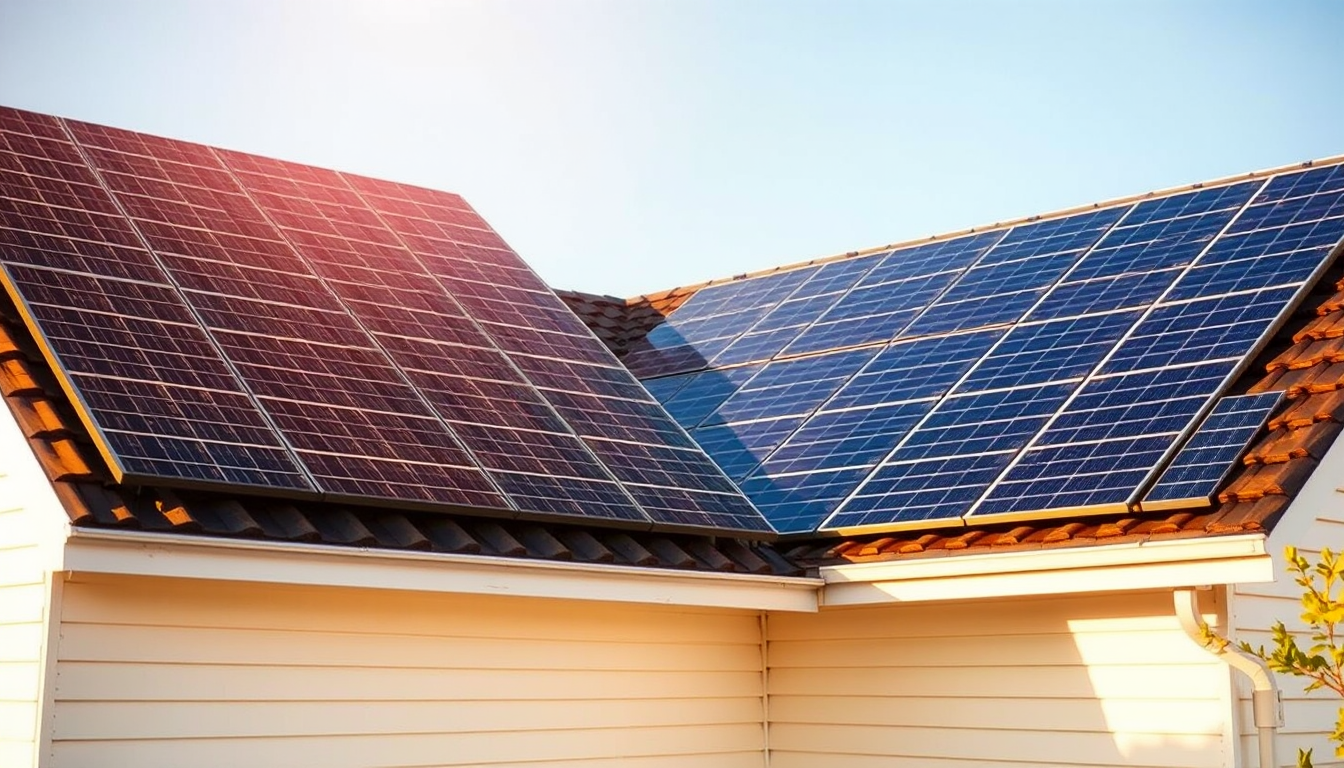
Do Solar Panels Really Only Last 25 Years? (What the Data Actually Shows)
"25-year warranty" is the warranty, not the expiration date. Here's the real field data on solar panel degradation, what actually fails first, and why budget vs. Tier-1 panels only diverge in the long tail.
"25-year warranty." If that number is why you've been sitting on a solar decision, here's the honest correction: 25 years is the warranty, not the expiration date.
Most homeowners hear "these panels last 25 years" and quietly assume that at the end of year 25 the roof goes dark, you get a big bill, and the whole thing was a 25-year lease in disguise. That is not what the data says. Panels from the 1980s and 1990s are still generating electricity today, often at 80% or more of their original output. The 25-year figure is a conservative commercial warranty, not a physical lifespan limit.
Here's what actually happens over time, and where your money is really at risk (spoiler: it's not the panels).
The number that matters is the degradation rate, not the headline
Panels never "stop." They fade, a little, every year. That slow decline is called degradation, and it's the single most important (and most ignored) spec when you're comparing panels.
The mechanics work like this:
- First year: a small initial drop, typically 1-3%, as the cells stabilize (this is called light-induced degradation, or LID).
- Every year after: a steady, slow annual rate, usually under half a percent for quality modules.
Because solar is a multi-decade investment, that annual rate is what actually determines your lifetime energy. A panel degrading at 0.5% a year still produces about 88% of its original output after 25 years. One at 0.3% keeps about 94%. The difference sounds trivial in a single year, but it compounds over decades.
What the real field data says (not the brochure)
There's a persistent gap between what manufacturers advertise and what large field studies actually measure.
- Marketing claims: often 0.30% per year, based on accelerated indoor lab testing under controlled temperature and light.
- Real-world field data: for most modern Tier-1 modules, 0.40-0.55% per year.
A 2012 NREL study of more than 2,000 installations found median degradation of about 0.5% per year for crystalline silicon panels. More recent fleet-level analysis drawn from over 10,000 installations breaks it down by cell technology (per year):
| Cell technology | Field degradation | |---|---| | HJT (heterojunction), mono | ~0.36% | | TOPCon, mono | ~0.42% | | PERC, mono | ~0.48% |
The pattern: newer cell chemistry degrades more slowly. HJT ages the slowest, then TOPCon, then the older PERC that's being phased out. None of this is bad news. It's slow, predictable, and well within warranty. The point is to plan with the realistic field number, not the marketing one.
What the 25-year figure actually gets you
Here's the practical aging curve for a typical 4-6 kW home system:
| Age | Output at 0.5%/yr | Output at 0.7%/yr | |---|---|---| | 10 years | 95% | 93% | | 25 years | 88% | 84% | | 30 years | 86% | 79% | | 40 years | 82% | 73% |
At year 25, your panels are still producing roughly 84-88% of what they did on day one, and they keep generating well beyond that. Panels from the 1980s and 1990s have been measured at 80%+ after 35-40 years.
There are two warranties, and homeowners mix them up:
- Product warranty (10-25 years): covers manufacturing defects, delamination, frame corrosion, physical failure. A 10-year product warranty on a budget panel is a red flag.
- Performance warranty (25-30 years): guarantees a minimum output at milestones, typically 97-98% in year one and at least 80-84% at year 25.
One warning worth taking seriously: a performance warranty is only as good as the manufacturer's ability to honor it 25 years from now. That's a strong argument for an established Tier-1 brand over a name you've never heard, because a small brand that vanishes cannot honor a promise made a decade ago.
The thing that actually fails first is not the panels
In real-world systems, the panels themselves rarely fail. The parts that usually need replacing:
- String inverter: 10-15 years. Budget for one replacement in the system's lifetime.
- Hybrid inverter: 10-15 years.
- Microinverters: 20-25 years, and an individual failure only knocks out one panel.
- Battery (if you add one): 10-16 years.
- DC cables and connectors: 20-30 years, worth checking at year 15-20.
- The panels themselves: 30-40+ years. They almost never die before the inverter does.
So the realistic maintenance story for a 30-year system is: swap the inverter once, maybe trim a tree, and the panels quietly keep working. That is a remarkably low-maintenance 30-year asset.
Budget panels vs. Tier-1: the difference is the long tail
This is where a small per-year difference becomes real money. A premium panel at 0.5%/yr produces 88% of original output at year 25. A budget panel at 0.9%/yr produces only about 80%. On a 4 kW system, that gap is roughly 320 watts of lost capacity at year 25, which is a meaningful chunk of your generation in the back half of the system's life.
Over 25 years, choosing the lower-degrading module compounds into a real difference in total energy produced. The best independent quality signals are durability programs like the PVEL/RETC scorecard, which test panels for years before they ever ship.
What you can actually do to protect the lifespan
Most of a panel's life is determined at the factory. You can't change its intrinsic degradation rate, but you can avoid the things that make it worse:
- Clean them. Soiling (bird droppings, lichen, heavy dust) creates localized hot spots that accelerate cell degradation.
- Inspect once a year. Look for microcracks, delamination, discoloration, and loose MC4 connectors.
- Keep airflow under the panels. Panels run cooler and degrade more slowly with adequate ventilation under the mounting.
- Manage shade. Partial shading causes hot spots that age the shaded cells faster. Trim overhanging branches before they shade the array.
The honest bottom line
If you're weighing a solar investment, treat degradation not as a reason to hesitate but as a small, predictable line item. At modern rates, your panels will still be producing 85-90% of their original output after 25 years, long after they've paid for themselves, and they'll keep going past that. The parts you should genuinely plan for are the inverter and, if you add one, the battery.
The question that's actually specific to your home is whether your roof can carry a system large enough to make all that long-horizon math worth it. Orientation, shade, and available area decide how many panels fit, and that number drives your total 25-year savings.
A $19 SolrScan satellite scan reads your exact address and returns your annual sunshine hours, how many panels fit on your roof, the recommended system size, and your projected yearly savings. That's the number the 25-year story is built on.
Run it here: https://solrscan.com
SolrScan estimates are based on satellite imagery and public data. Consult a licensed installer for a site-specific assessment.