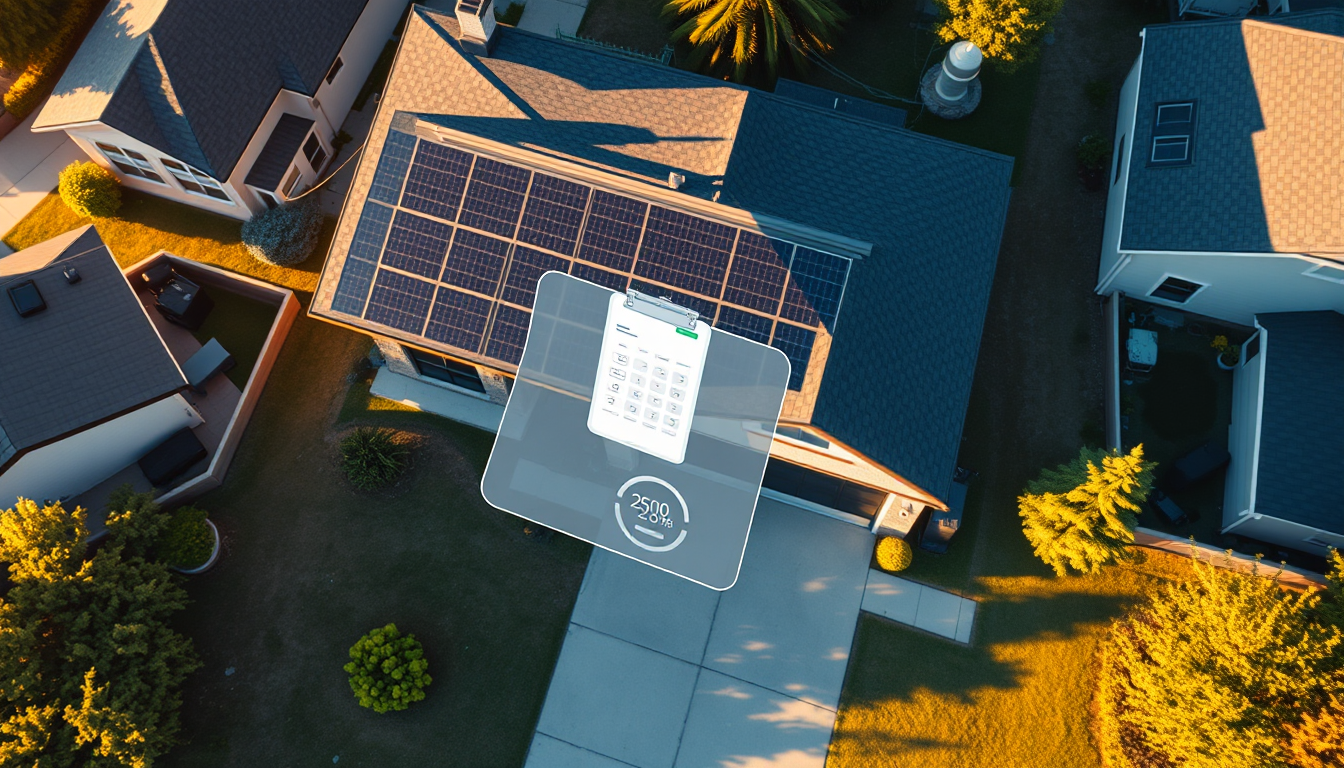
How Much Does Solar Actually Save You Per Month? Real 2026 Numbers by State
Most homeowners save $100 to $150 a month with solar, but the real number depends on your utility rate, how much power your home uses, and your local net metering rules. Here is the math with real 2026 figures.
Every solar sales call eventually lands on the same sentence: "You're going to save a lot of money." That is true, but it is also useless. The number that actually matters is the one specific to your address, and it is not a single figure. It is a range, and it is driven by a handful of variables you can figure out before you sign anything.
This article walks through the real 2026 numbers so you can estimate your own savings, and so you understand exactly what pushes the number up or down.
The short answer
For the typical U.S. home, a properly sized solar system offsets roughly $100 to $150 off the monthly electric bill. That is the headline range, but it masks a wide spread. A homeowner in Hawaii can save more than three times as much per kilowatt-hour as a homeowner in Louisiana, almost entirely because of the difference in what their utility charges.
Two anchor facts make the rest of this math make sense. The average American home consumed about 843 to 899 kilowatt-hours (kWh) per month in recent EIA data, and the national average residential electricity rate is now in the mid-to-high 17-cent-per-kWh range. Multiply those together and a typical pre-solar bill lands somewhere around $155 to $165 a month. That bill is the ceiling on your savings, and your local rate is the biggest lever.
The four things that set your number
Your monthly solar savings is not one number. It is the product of four inputs, and two of them (system size and your own usage) are things you control.
1. Your utility rate. This is the single biggest driver. The same 7 kW system producing the same 850 kWh a month is worth about $102 at a 12-cent rate, about $138 at the 17-cent national average, about $221 at a 26-cent California rate, and roughly $332 at a 39-cent Hawaii rate. The panels do not change. Only the price tag on each kilowatt-hour does.
2. Your home's electricity usage. Your monthly consumption sets the ceiling. If your home uses 1,000 kWh a month and you install a system that only covers 60% of that load, your savings plateau around $90 regardless of your rate. Homeowners who undersize a system to cut upfront cost often discover their bills stay stubbornly high in peak summer when the air conditioning kicks on.
3. Your system size. Each additional kilowatt of capacity adds roughly 100 to 140 kWh of monthly generation, depending on location. A 6 kW system in a mid-sun state produces around 900 kWh a month; an 8 kW system in the same spot produces closer to 1,200 kWh. Right-sizing to your actual 12 months of usage, plus any EV or heat pump you plan to add over the next few years, is where careful planning pays off.
4. Your state's net metering rules. Under full retail net metering, still the standard in most states, every kilowatt-hour your panels export during the day offsets one you pull at night, dollar for dollar. Your savings reflect your total generation, not just the power you use the instant it is made. California changed that in 2023 with NEM 3.0, cutting export credits to a fraction of the retail rate and trimming the savings potential for new customers by roughly 15 to 25% compared to the old rules. In states with strong full retail net metering, a properly sized system can genuinely zero out the bill for nine or ten months of the year, with only winter creating a small net charge.
What a typical bill becomes
Here is what a well-sized system does to a real bill. Take an average home using about 900 kWh a month at the national mid-to-high 17-cent rate, a pre-solar bill of roughly $155. A 7 kW system producing about 850 usable kilowatt-hours after typical 15 to 20% losses covers nearly the whole thing, leaving only the small fixed grid-connection fee most utilities charge, usually $5 to $15 a month.
The installed cost to get there is the other side of the equation. In 2026, the national median installed price for residential solar is in the $2.50 to $3.50 per watt range before incentives. That means an 8 kW system costs roughly $20,000 to $28,000 installed, and a 10 kW system runs about $25,000 to $35,000. The exact figure depends heavily on where you live. California, Hawaii, and the Northeast typically run a quarter to half a dollar per watt above the national median because of permitting complexity and labor costs, while Texas, Arizona, and Florida tend to sit below it.
One detail worth knowing: the panels themselves are only about 15 to 20% of your total installed cost. Inverter, racking, wiring, labor, permits, and installer margin make up the rest. So the "how much will this save me" question and the "what will it cost" question are really the same calculation, viewed from two ends.
The 25-year picture
The monthly number is satisfying, but the lifetime number is what most homeowners care about. Over a 25-year panel lifespan, a typical system saves homeowners somewhere in the $40,000 to $155,000 range on electricity, depending on where they live and how rates climb. The EIA has projected residential electricity prices to keep rising, which quietly improves the case for solar year over year. The longer the rates climb, the more every kilowatt-hour you generate yourself is worth.
How to get your number, not the average
Everything above is a national average. Your number is different because your address, your roof, and your local rate are different. The honest way to find out is to size a system against your actual usage and your actual kilowatt-hour cost, rather than taking an installer's best-case estimate.
The fastest, lowest-pressure way to do that is to run a satellite scan of your home. A $19 report at https://solrscan.com pulls your specific address and gives you the annual sunshine hours, the recommended number of panels and wattage, the estimated system size and installation cost, and your projected energy savings. No sales call, no 45-minute pitch, no "free estimate" that turns into a door-knock. Just the math for your exact roof, so you know your number before you ever talk to an installer.
Run your scan here: https://solrscan.com
SolrScan estimates are based on satellite imagery and public data. Consult a licensed installer for a site-specific assessment.