Is a Home Battery Actually Worth It in 2026? (The 30% Credit Is Gone)
The 30% federal battery tax credit expired December 31, 2025. Here is what a home battery costs now, what incentives are left, and the specific situations where one still makes financial sense versus the ones where you should wait.
You are reading a lot of outdated math right now.
If you search "home battery tax credit" in 2026, most results will cheerfully tell you to expect 30% of your battery cost back from the government. That is wrong. The 30% residential credit (Section 25D) that covered both solar panels and battery storage was terminated by the One Big Beautiful Bill Act, signed July 4, 2025, for all systems placed in service after December 31, 2025.
If you buy a home battery with cash or a loan this year, in any state, the federal credit is $0.
That changes the math. So before you decide, let us walk through what a battery actually costs now, what is left in the way of incentives, and the specific situations where one still pays for itself versus the ones where waiting is the smarter move.
First, what does a home battery actually cost?
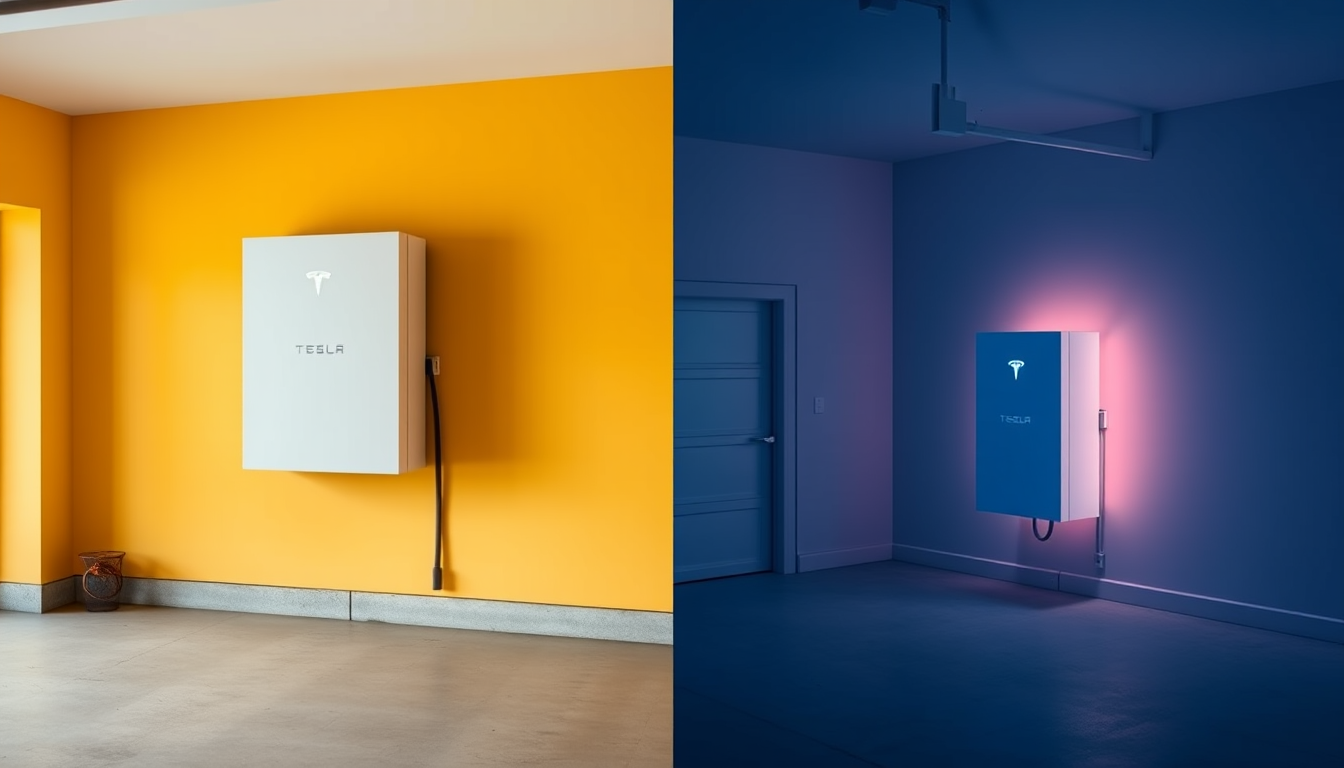
Price varies a lot by region and installer, but the reference number most people ask about is the Tesla Powerwall 3, the 13.5 kWh battery with a built-in solar inverter.
Installed, a single Powerwall 3 lands in roughly the $9,200 to $12,000 range in 2026. Two units run about $17,000 to $22,000, and three run about $25,000 to $32,000. That works out to roughly $681 to $889 per usable kilowatt-hour installed.
With the federal credit gone, that installed per-kWh number is what you actually pay. No 30% haircut coming to lower it.
A couple of competitor benchmarks for context: an Enphase IQ Battery 5P runs about $800 to $1,000 per kWh, and a SolarEdge Home Battery lands in the same ballpark. Modular LFP systems can be cheaper per kWh, but they often mean more complicated installs.
The real question is not price. It is what the battery does for you.
A battery is not a solar panel. Panels turn sunlight into free electricity and save you money by using less grid power. A battery stores electricity for later. Its value comes in layers, and how much of those layers you actually need depends on where you live and how your utility charges you.
Here is where the savings and the protection actually come from, and which households get each one.
You have solar but your net metering is weak
This is the quiet winner. In some states your utility pays full retail for the solar you export. In others it pays a fraction, or close to nothing.
If your export rate is thin, you are effectively selling cheap and buying back expensive. A battery lets you store that daytime power and use it yourself during the expensive evening hours, so you keep the value in your house instead of giving it back to the grid for pennies.
The flip side is just as true: if you have strong full-retail net metering, the grid is already acting like your battery. As Wood Mackenzie's Max Issokson put it, when you have good net metering, "the grid essentially functions as a battery." In that case, the main reason to add storage is backup and resilience, not savings.
You are on a time-of-use plan
Time-of-use rates charge you more in the late afternoon and evening when everyone is home and demand peaks. A battery charges when rates are low and discharges when rates are high, which the system usually handles automatically. If your utility has expensive peak windows, this is a real, recurring bill reduction.
You live in a high-outage area
Outage protection is the number one reason homeowners actually buy a battery, ahead of cost savings, according to Habitelligence's Home Battery Adoption survey. If you work from home, run medical equipment, or just hate going dark in a storm, that is a legitimate reason and it does not need to pass a strict payback test.
One Powerwall 3 runs your essential loads (fridge, lights, wifi, phone charging is roughly 400 to 500 watts) for about 27 to 34 hours. Add a window AC and that drops to around 8 hours. Two units get you whole-home backup for a typical 2,000 to 2,500 square foot house for roughly 12 to 24 hours without the sun recharging it. With solar on the roof, a sunny day recharges the batteries and can extend backup effectively indefinitely for moderate loads.
Your utility offers a virtual power plant program
A growing number of utilities pay you to let them dispatch your battery during peak events. Massachusetts' ConnectedSolutions program, for example, has averaged about $1,200 per year in participant payments. This is grid-services money paid over time, not a sticker-price rebate, but it can offset a meaningful chunk of the cost.
Now the honest part: when you should wait
Same research, opposite conclusion. A battery is the weaker buy when:
- You have strong full-retail net metering and your grid is reliable. You get less financial upside, and the backup rarely fires.
- There is no local rebate or incentive. With the federal credit gone, Issokson's point is blunt: "If there's no state or utility program available with rebates, there's not really much to fill the gap that the tax credit left."
- Outages are rare where you live and you are buying purely to save money. In those markets he calls storage "more of a higher-end luxury thing than a bill savings mechanism."
What incentives are actually left in 2026?
The federal purchase credit is gone in every state, so the entire incentive picture for a cash buyer is now state and utility programs, and it is uneven.
California is the clear standout. The state's SGIP (Self-Generation Incentive Program), run through the CPUC and paid out by PG&E, SCE, and SDG&E, pays roughly $150 to $200 per usable kWh in the general market tier, and up to about $1,000 per usable kWh in the equity resiliency tier for homes in high fire-threat districts or on a medical baseline. At that level it can cover most of the battery for the households that need backup most. The catch: SGIP funding runs in limited rounds that fill up and reopen, so confirm your tier and current availability on the CPUC portal before you count on a number.
Beyond California, the picture splits into two mechanics that people constantly confuse:
- Purchase rebates cut your upfront cost once. Maryland has run an energy-storage income-tax credit; New York has run storage incentives through NY-SUN and utilities like Con Edison.
- Performance payments pay you over time. The Northeast ConnectedSolutions states (Massachusetts, Connecticut, and others) work this way. The utility borrows your battery's capacity a few times a season and pays you for it.
A salesperson may quote you a "$1,000 incentive" that is actually a multi-year grid-services payment, not money off the sticker. Only a purchase rebate lowers what you finance today. Sort any offer into the right bucket before you compare it to a California SGIP rebate.
Texas and Florida, for what they are worth, have no statewide battery purchase rebate in 2026. Some individual utilities and co-ops run their own bring-your-own-battery or grid-participation programs, but those are utility specific and open and close, so check your own utility directly.
One more thing to know: the commercial credit (Section 48E) is still alive, but it flows to leasing companies and PPA providers, not to you as a cash buyer. That is one reason third-party-owned batteries can still show an artificially low rate even though you personally claim nothing.
The bottom line
The credit is gone, but the reasons to own a battery are not. Rising electricity rates, aging grid infrastructure, and outages are all still real. Whether it is worth it for you comes down to four questions:
- How does your utility pay you for exported solar, and how expensive are your peak hours?
- How often does your power go out, and what would actually break or get lost if it did?
- What state or utility program is currently open in your area (check DSIRE and your utility directly)?
- Is your real goal savings, or is it resilience and peace of mind?
If the answer to a few of those is "yes," a battery in 2026 can still make sense. If your net metering is strong, your grid is reliable, and there is no local money to fill the gap, you are better off waiting and putting the savings elsewhere.
Find out what YOUR roof produces first
The honest first step is not buying a battery. It is knowing whether your home even makes a compelling solar case, because a battery only makes sense stacked on top of a good solar system (or a genuinely strong backup need). A single satellite scan of your home at https://solrscan.com pulls your exact address's annual sunshine hours, the number of panels that fit, the system size and install cost, and your projected energy savings for about $19. No sales call, no driveway appointment. Once you know what your roof is actually worth, the battery question becomes a lot easier to answer.
SolrScan estimates are based on satellite imagery and public data. Consult a licensed installer for a site-specific assessment.