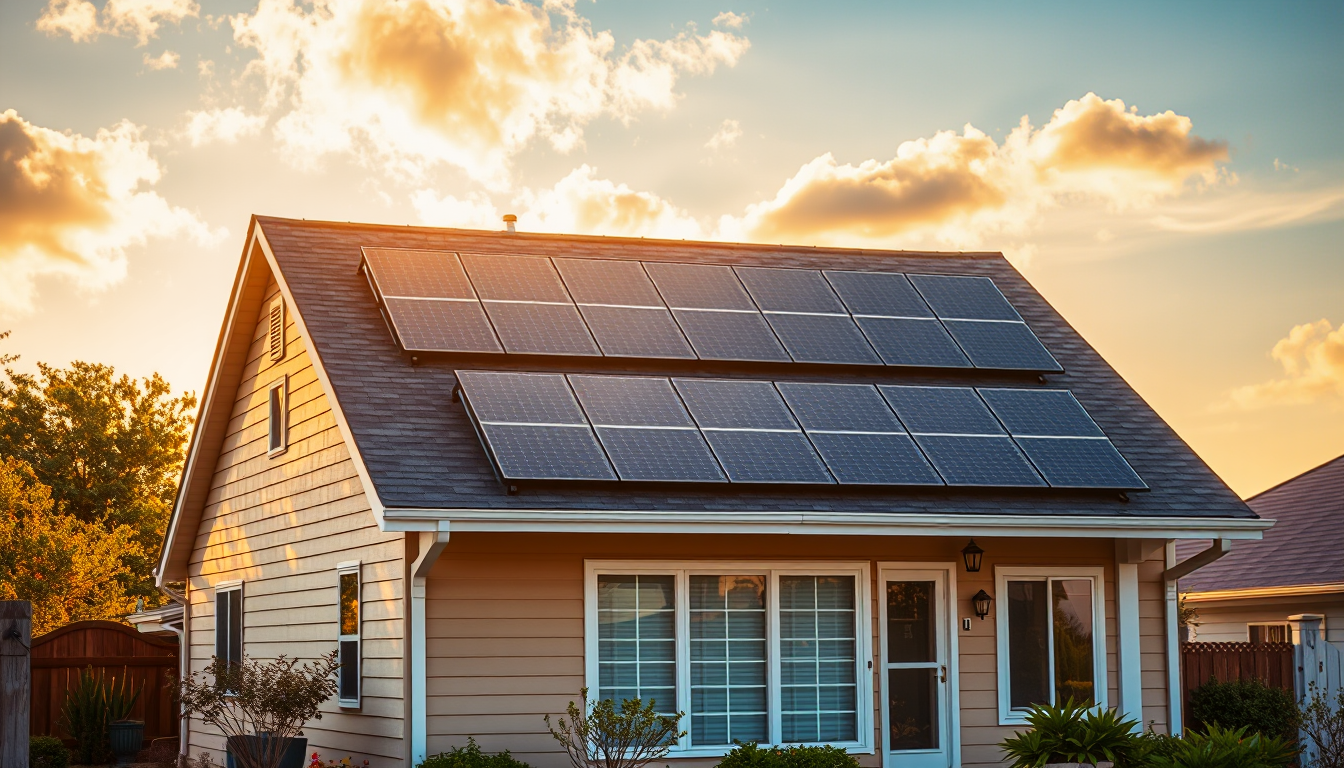
Is My Roof Good for Solar Panels? A Simple Checklist for Homeowners
Not every roof is equally suited for solar, but far more of them work than homeowners assume. Here is what actually matters: shade, direction, pitch, age, and usable space.
Before anyone buys a panel, the first question is almost always the same: "Is my roof even good for solar?" And the honest answer is that most roofs are, at least for part of their surface. A handful of factors decide how well a specific home will produce, and none of them are hard to check from the ground.
Here is what actually determines whether your roof is a good fit, in order of how much it matters.
1. Shade is the real enemy
Direction gets more attention than it deserves. Shading, from trees, a taller neighbor, a chimney, or a neighboring building, is what quietly kills solar output. One shaded panel can drag down the whole string it is wired into, so even a single big shadow across a corner of the roof can cost more than people expect.
The practical test is simple: watch your roof from sunrise to sunset over a few days. If a good chunk of it sits in shadow for a large part of the day, that is the number one thing to fix or work around before you commit. Panels placed where they get direct midday sun will always outperform panels fighting a shade line.
2. Direction matters less than you think
In the northern hemisphere, true south is the ideal direction for panels. But "ideal" and "unusable" are two very different things, and the middle is where most homes live.
Here is what the research shows about production versus true south:
- South-southeast and south-southwest: 97 to 99 percent of optimal. Excellent.
- Southeast or southwest: 88 to 96 percent. Still very good.
- East or west: 70 to 82 percent. Workable, and sometimes even valuable.
- North: 30 to 55 percent. Generally not worth it for grid-tied systems.
So if your roof faces southeast or southwest, you are doing great. If it only has east and west slopes, you have real options: install on both slopes for a combined 75 to 85 percent of a south-facing system, or install only on whichever slope is closer to south. In some regions with time-of-use rates, a west-facing roof that peaks in the late afternoon can actually earn more per kilowatt-hour than a south-facing one.
3. Pitch (tilt) is forgiving
Your roof's pitch sets the panel angle, and the rule of thumb is that the best fixed tilt is roughly equal to your latitude. But here is the reassuring part: the range of pitches found on typical American roofs, roughly 18 to 45 degrees, happens to be close to optimal for most of the country.
Deviation from the perfect angle is not dramatic. NREL production modeling shows that staying within about 15 degrees of the ideal tilt typically costs only 1 to 5 percent of annual production. That is far less than the cost of re-roofing or adding expensive tilt frames, so in the vast majority of homes you should not over-engineer the tilt. Direction will matter more to your bottom line than tilt will.
4. Age and condition
If your roof is old or needs repair soon, plan for it before you mount panels. Installing panels only to discover the roof needs replacing a few years later means paying twice, once to install and once to remove and re-install. If the roof is near the end of its life, it is usually worth re-roofing first and then putting the panels up on fresh surface. If it is in good shape and has many years left, you are in good position to install now.
5. How much usable space you actually have
Not every square foot of roof is usable. Obstructions, setbacks, and the need for spacing take out a fair amount. As a rough guide, expect about 60 to 70 percent of your roof area to be genuinely available for panels. From there, a typical panel occupies around 21 square feet, so you can estimate how many will fit and roughly what system size you are looking at.
What to do next
You do not need to guess at any of this. The fastest way to know where your specific home stands is to look at your own address, not a generic answer. SolrScan scans any home from satellite imagery and instantly generates a solar potential report showing your annual sunshine hours, the recommended number of panels and wattage, your estimated system size and installation cost, and your projected energy savings.
Run your address through https://solrscan.com and get a clear, number-based picture of your roof's potential in minutes. That is the cleanest first step toward a real decision about solar.
Sources
- Modernize, "Best Roof Pitch for Solar Panels vs Solar Panel Tilt" (updated August 12, 2026)
- Solar Price List, "Solar Panel Tilt Angle and Azimuth Guide 2026" (August 22, 2026)
- PVfig, "Solar Roof Orientation & Shading: What Hurts Production Most"
SolrScan estimates are based on satellite imagery and public data. Consult a licensed installer for a site-specific assessment.