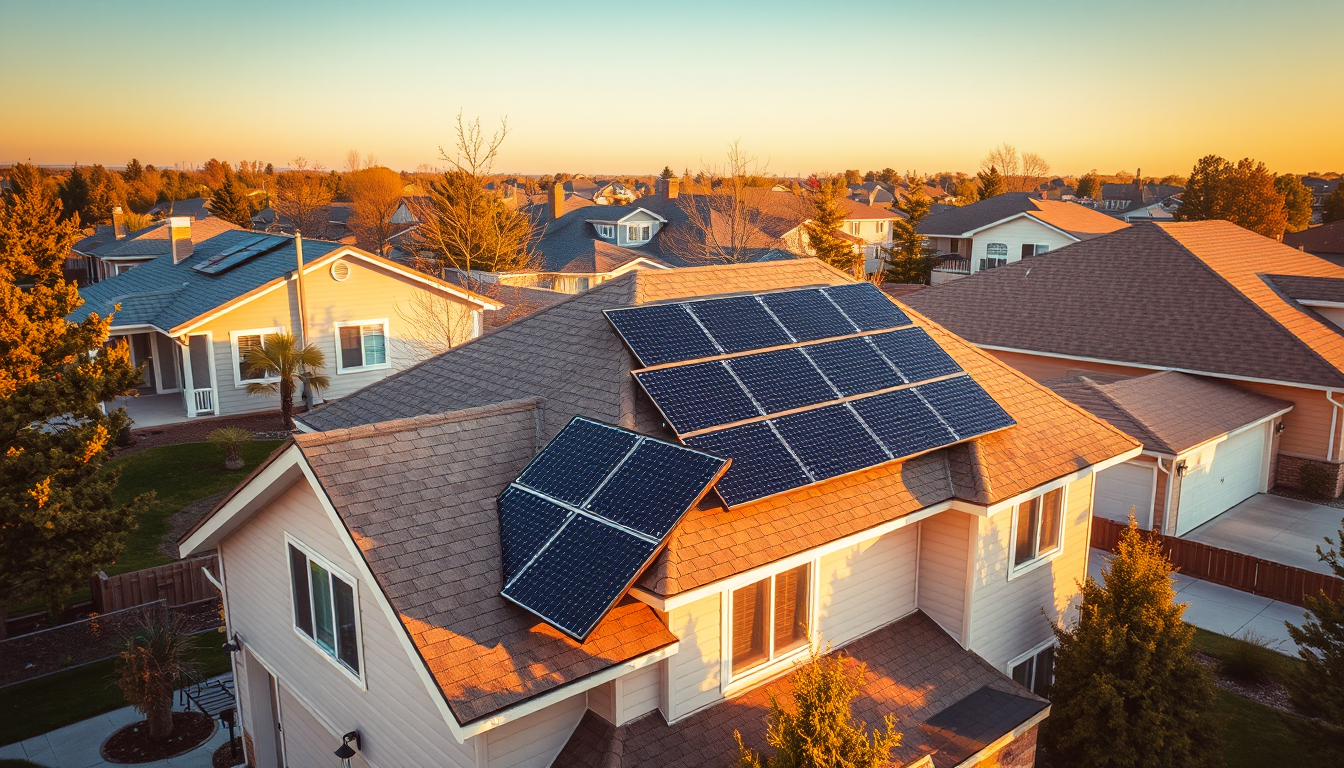
The 30% Solar Tax Credit Is Gone for 2026. Here's What Changed for Homeowners
The federal residential solar tax credit (Section 25D) expired December 31, 2025, with no phase-down. Here's what that means for your solar math in 2026, and which incentives actually still exist.
If you have been thinking about solar in the last couple of years, you have probably heard the headline number: 30% back on your installation. That credit is gone for systems installed in 2026. This is not a rumor or a mid-year change. It is settled, it happened on a fixed date, and it changes the math for anyone deciding now.
Let me walk you through exactly what ended, what still exists, and what it means when you are trying to figure out whether solar makes sense for your home.
What actually expired
The Residential Clean Energy Credit (Section 25D) let homeowners deduct 30% of the cost of solar panels, solar water heating, battery storage (3 kWh or more), and a few other technologies from federal taxes owed. It was uncapped and nonrefundable with a carryforward.
The Inflation Reduction Act had originally extended that credit through 2032 before stepping it down. That schedule no longer exists. The One Big Beautiful Bill Act (P.L. 119-21), signed July 4, 2025, terminated the residential credit for systems with expenditures made after December 31, 2025.
Three details here are worth being precise about, because they trip people up.
First, there is no reduced 2026 rate. Not 26%, not 22%, not anything. The credit simply stops at $0 for 2026 installations. If an installer's sales material still says "get 30% back" on a system you would install this year, that is a red flag, not a deal.
Second, the test is when the expenditure was made, treated as the date the original installation was completed, not when the system is placed in service. A system finished in 2025 is generally the qualifying case even if some paperwork trailed into 2026. If this touches your actual return, work from the U.S. Code text and take it to a tax professional.
Third, and this is the part most people do not realize: leased and PPA (power purchase agreement) systems never qualified for Section 25D in the first place, because the credit required you to own the equipment. So the termination hit buyers, not lease customers. That distinction matters a lot for what you will be offered in 2026.
The numbers that change your decision
A typical residential system in 2026 runs roughly $2.50 to $3.50 per watt installed, before battery. A 6 kW to 8 kW system, the size that covers an average U.S. home's use of about 10,500 kWh per year, lands in the neighborhood of $18,000 to $28,000 depending on your area and equipment.
When the federal credit was live, a $24,000 system dropped to about $16,800 in real cost. That 30% was, for many homeowners, the deciding factor that pushed payback into a reasonable window.
Remove it, and that same system stays at $24,000. The solar is still producing the same kilowatt-hours. The panels still earn the same value from your utility through net metering or net billing. But the upfront cost is higher, and that means the payback period gets longer. Solar is still worth it in many places. It is just no longer worth it in every place, at every price, the way it was two years ago.
That is the honest takeaway, and it is why the next two sections matter.
What still exists in 2026
The federal residential credit is gone, but a large amount of the incentive landscape did not disappear with it. State, utility, and local programs are not affected by the federal termination, and in several states they are worth more than the old Section 25C efficiency credit was.
State solar tax credits that are still active in 2026 include:
- New York: 25% state income tax credit, capped at $5,000
- Massachusetts: 15% state income tax credit, capped at $1,000
- Arizona: 25% state income tax credit for qualifying systems
Several other states offer smaller credits, and many states offer property tax exemptions, sales tax exemptions, SREC (solar renewable energy certificate) income, and net metering programs that remain in effect. State credits are income tax credits, so they directly reduce what you owe rather than just lowering taxable income, and they generally stack with rebates.
The reliable way to find what applies to your address is the DSIRE database (dsireusa.org), which tracks state incentives and net metering rules. Programs change, some have annual caps, and the rules differ by state, so confirm the current caps and application steps with your state Department of Revenue.
Why you should get your real numbers before you commit
Here is the part that matters for your specific decision. Whether solar still makes sense after the federal credit expired is not a one-size-fits-all answer. It depends on:
- Your local electricity rate, which is the price you are replacing
- Your peak sun hours, which vary hugely by region. A home in a 6-hour Sunbelt area needs far fewer panels than the same home in a 3-hour region like the Pacific Northwest or New England
- Your actual roof: orientation, shading, pitch, and usable space
- Which state or local incentives still apply to your address
Two homes of the same size can have wildly different solar paybacks because of these variables, and a lot of generic online calculators skip them entirely. The most useful first step is to get the numbers for your actual address, not the national average.
What to do next
If you are considering solar in 2026, start with your own home's real numbers rather than a generic estimate. You do not need a 90-minute in-person sales pitch to find out your baseline.
At SolrScan, you can run a $19 satellite scan of any home and get a solar potential report with the inputs that actually drive your decision: your address-specific annual sunshine hours, the recommended number of panels and wattage, your estimated system size and installation cost, and your projected energy savings. It is a low-pressure way to see, for your specific roof, whether the numbers still work without the federal credit.
Get the real numbers for your home, then do the payback math with the state incentives that actually apply to your address. That is how you decide this in 2026.
SolrScan estimates are based on satellite imagery and public data. Consult a licensed installer for a site-specific assessment.